Commonly known as the bearded iris, Iris germanica is a long-lived flowering perennial valued for its bold, sculptural blooms and sword-like foliage. It is one of the most widely cultivated iris species in temperate regions across Europe, North America, Turkiye, and parts of Asia.
Although sometimes casually referred to as a “lily,” it is not a true lily. True lilies belong to the genus Lilium, while bearded iris belongs to the family Iridaceae and grows from rhizomes rather than bulbs.
Plant Shape, Color, Description
Bearded iris forms upright, fan-shaped clumps of gray-green to blue-green leaves. The foliage is flat, narrow, and sword-like, providing strong vertical structure in garden beds even outside the flowering season.
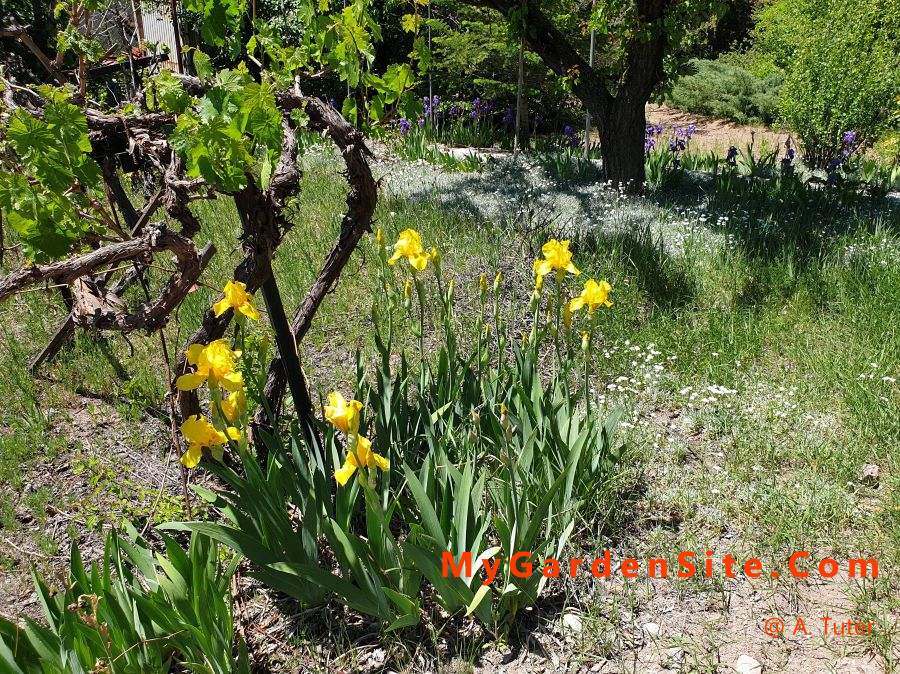
The plant spreads through thick horizontal rhizomes that often sit partially exposed at the soil surface. In spring, tall flower stalks rise above the foliage, bearing large and intricately formed blooms. Each flower consists of three upright petals known as standards and three drooping petals called falls. The falls feature a soft, fuzzy “beard,” which distinguishes this group from other iris types.
Flower colors range widely, including yellow, white, blue, purple, pink, orange, burgundy, and striking bi-color combinations.
Plant Type
Perennial flowering plant. It returns each year from the same rhizome and can live for decades when properly maintained.
Why You Grow It
Bearded iris is grown for its dramatic spring display, architectural foliage, and dependable performance. Once established, it tolerates drought, adapts to various soil types provided drainage is good, and withstands both summer heat and winter cold in temperate climates. It is especially effective in borders, cottage gardens, xeriscapes, and low-maintenance landscapes.
Pot vs Ground
Bearded iris generally performs best when planted in the ground, where rhizomes can expand freely and soil conditions are more stable. Garden planting typically results in stronger clump development and more abundant flowering over time.
It can also be grown successfully in containers if drainage is excellent and the pot is wide enough to allow horizontal rhizome growth. In pots, watering must be monitored more carefully, and division is often needed sooner due to limited space.
Growth Speed
Growth is moderate. A newly planted rhizome usually establishes during its first growing season and often flowers the following spring. Over two to three years, clumps expand outward as new rhizomes form. Without periodic division, overcrowding may gradually reduce flowering.
Heat and Cold Tolerance
Bearded iris is highly adaptable in temperate climates. It tolerates summer heat well when planted in well-drained soil. In extremely hot regions, some light afternoon shade may reduce stress.
It is also cold-hardy and survives freezing winters in many regions. During cold periods, the plant enters dormancy, and the rhizomes remain viable underground, resuming growth when temperatures rise.
How It Grows / Behavior During the Year
Active growth begins in late winter or early spring. Flower stalks develop in mid to late spring, depending on local climate. After blooming, energy is redirected into strengthening and expanding the rhizomes for the next season.
In very hot climates, growth may slow during peak summer heat. In mild regions, foliage may remain partially evergreen through winter. Over time, rhizomes multiply outward, forming dense clumps that benefit from division every three to four years.
Flowers
Blooming typically occurs in spring. Some modern cultivars are reblooming varieties and may flower again in late summer or early autumn.
Each individual bloom lasts only a few days, but mature plants produce multiple stems, extending the overall flowering period. Many varieties have a light fragrance. Flower size and color intensity improve with full sun exposure.
Sun
Full sun is ideal, with at least six hours of direct sunlight per day. Insufficient sunlight reduces flowering and may weaken stems or increase susceptibility to disease.
Watering
Moderate watering supports healthy growth during spring. Once established, bearded iris is relatively drought tolerant. The most critical requirement is excellent drainage. Prolonged wet soil, particularly heavy clay, can lead to rhizome rot.
Plant Care
Light fertilization in early spring supports blooming. A low-nitrogen fertilizer such as 5-10-10 is recommended, as excessive nitrogen encourages leaf growth at the expense of flowers and may soften rhizomes.
After flowering, cut back spent flower stalks at the base. Remove damaged or diseased leaves to maintain airflow. Division every few years prevents overcrowding and maintains strong flowering performance. When replanting, position rhizomes shallowly, leaving the upper surface exposed to sunlight.
Insects and Pests
In some regions, iris borers may tunnel into rhizomes, weakening the plant. Removing old foliage and maintaining good sanitation helps reduce risk. Slugs can damage young shoots in damp climates. Fungal leaf spot may occur where airflow is poor, but serious infestations are uncommon in sunny, well-drained conditions.
Winter Behavior
In colder climates, foliage may die back after frost and the plant enters dormancy. In milder regions, leaves may remain partially green. The rhizomes are cold-hardy and survive underground, resuming growth in spring. Heavy mulching is generally discouraged because it can trap moisture and increase the risk of rot.
Common Problems
The most frequent problem is rhizome rot caused by poor drainage or excessive watering. Overcrowding reduces flowering over time. Too much nitrogen fertilizer may result in lush foliage but fewer blooms.
Worth Growing?
Yes. Bearded iris is one of the most rewarding perennial ornamentals for temperate gardens. It combines dramatic visual impact with durability, moderate growth, and relatively low maintenance, providing reliable seasonal color year after year.
Plant Profile
Botanical Name: Iris germanica
Plant Type: Rhizomatous perennial
Family: Iridaceae
Origin: Southern Europe and Mediterranean (widely hybridized)
Lifespan: Perennial
Mature Size: 60–120 cm tall · 30–60 cm spread
Other Names:
EN: Bearded Iris · DE: Bart-Iris · ES: Lirio barbudo · RU: Ирис германский · TR: Süsen
Post By: A. Tuter
———————————————-
Terms of Use: Unauthorized copying is prohibited; we maintain dated records to document original publication. Content is provided “as is” and may contain inaccuracies. See our Terms Page.