General growth and plant shape
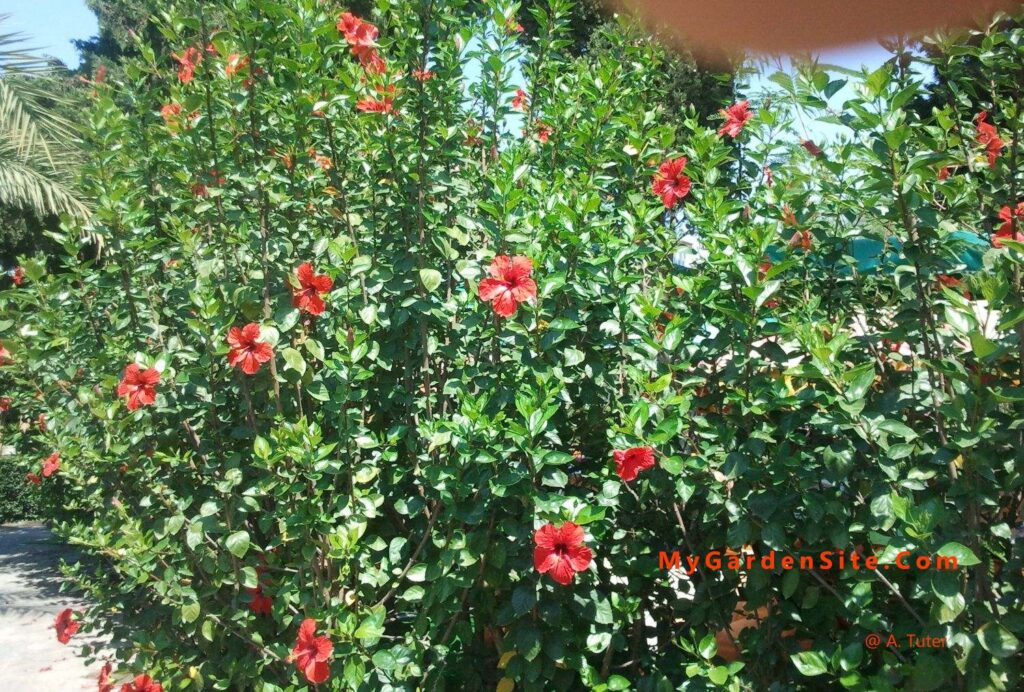
Hibiscus is a plant most people recognize immediately. It has large red flowers, soft petals, and a long center part that sticks out. It can be grown both in pot and in the ground. In the ground it can grow like bush. It also grows woody stem and because of this, it can be pruned into a neat hedge or be allowed to grow into a wild, natural bush.
The leaves are bright green. Young leaves are softer, older leaves are stronger. Even without flowers, a healthy hibiscus still looks good because of its foliage.
Growth speed: in good conditions, a healthy hibiscus can grow 30–60 cm per year.
Flowers
The flowers are large, usually around 10–15 cm wide. Red is the most common color. Most flowers stay open for only one day. This surprises many people at first. Hibiscus does not keep flowers for a long time. Instead, it produces new flowers again and again when conditions are good. If the plant is healthy, you will see buds forming regularly. Hibiscus are heavy feeders. High Potassium fertilizers would help for getting those nice flowers.
Sun exposure
Hibiscus likes sun, but in very hot weather, leaves may droop and buds may fall before opening. Some protection from late afternoon sun helps, especially in hot regions.
Watering
Watering is one of the most important points. Hibiscus does not like very dry soil, but it also does not like constantly wet soil. If you forget watering, it may drop leaves. If you overwater, leaves may turn yellow. When watering problems are fixed, the plant usually recovers well.
Pruning
Hibiscus reacts well to pruning. Light pruning helps it grow more branches. Even stronger pruning is usually safe if done at the right time.
This makes hibiscus a good plant for learning pruning. Small mistakes are usually forgiven, and the plant responds with new growth.
Winter behavior
Hibiscus looks tropical, but it also grows well in mild climates where leaves can stay green including winter provided that temperatures are above 10 °C. In cooler areas, growth slows down a lot and the plant may look weak, but it is often still alive. It is not suitable for areas where temperatures may fall to freezing as the plant will die. In Mediterranean coastal areas, hibiscus often keeps leaves all winter. Preferred temperature for growth: about 18–30 °C
A protected place helps. Potted plants benefit from being moved to a sheltered area in winter. Cold wind can be more damaging than cold temperature.
Common problems
Hibiscus shows problems clearly. Yellow leaves usually mean water stress. Bud drop often happens because of heat or sudden changes or thrips (tiny insects). Aphids and ants are common, especially in spring. Most problems are easy to notice early and can be fixed by adjusting care. If hibiscus drops buds often, check the pot size and fertilizer first.
A slightly root-bound hibiscus in a pot often flowers better than one in a very large pot. Too much soil stays wet for too long and delays flowering. Regular feeding during the growing season helps more than moving it to a bigger pot.
In pots on balconies, missed watering is the most common mistake.
Is hibiscus worth growing?
Hibiscus needs some attention, but it is not difficult to grow. It is not a plant you can fully ignore, but it is also not fragile. If you watch it and respond when it shows stress, it rewards you with strong growth and large flowers. For gardeners who like plants that clearly react to care, hibiscus is a good choice.
EN: Hibiscus · DE: Hibiskus · ES: Hibisco · RU: Гибискус · TR: Hibiskus (Çin gülü / Japon gülü)
Botanical name: Hibiscus rosa-sinensis
Post By: A. Tuter
————————————-
Terms of Use: Unauthorized copying is prohibited; we maintain dated records to document original publication. Content is provided “as is” and may contain inaccuracies. See our Terms Page.