Composting is a natural process that transforms organic waste into nutrient-rich soil. Instead of discarding food scraps and garden trimmings, composting allows you to recycle these materials while simultaneously boosting your garden’s health.
Why Compost at All?
At first glance, it might seem like extra work. Whether you compost in a bin or let a banana peel rot on the lawn, the organic matter eventually returns to the earth. So why bother?
The key difference lies in **timing and stability**. Raw organic waste is in an active “processing” stage. When added directly to the soil, the microorganisms breaking it down temporarily “lock up” nitrogen from the surrounding area to fuel their work. This can inadvertently starve your plants of nutrients in the short term. For example, burying fresh kitchen scraps near plants can temporarily reduce nitrogen availability and slow growth. Furthermore, raw decomposition is often uneven and can attract pests or create unpleasant odors.
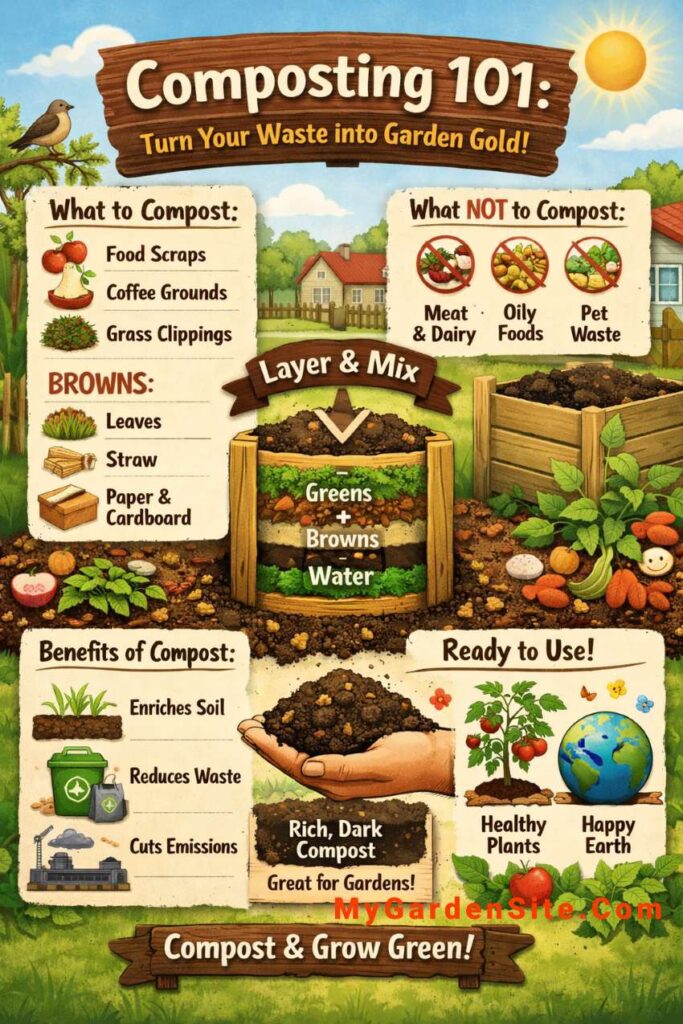
Compost, by contrast, is **stabilized organic matter**. Its nutrients are chemically available to plants more immediately, and it improves soil structure (tilth) without the side effects of active decay.
Studies show that adding compost to soil can increase plant growth and crop yields by around 10–30% under normal conditions, and even more in poor soils.
The “Large Garden” Exception
Some gardeners prefer “trench composting” or simply scattering waste. This can be effective, especially in larger spaces. When waste is spread thinly or buried deeply, nature handles the decomposition at its own pace. In a sprawling garden, issues like nutrient imbalances or smells are diluted by the sheer volume of soil.
However, this convenience involves a trade-off. Direct disposal is slower and less controlled. Proper composting creates a uniform, more stable, and generally safer material that can be applied exactly where your plants need it most.
The “Zero-Effort” Compromise
For those seeking a balance between labor and results, a **”static compost pile”** is an ideal solution. Simply designate a corner of the garden to dump organic waste. There is no need to worry about perfect ratios or frequent turning.
Over time, gravity and biology do the work; the bottom layers naturally darken and decompose into rich compost. You can occasionally harvest from the bottom while continuing to add fresh scraps to the top. It requires almost no maintenance but still yields a superior product compared to scattered waste.
What About Meat and Oil?
Materials like meat, dairy, and oily foods are often discouraged in traditional compost piles because they can create odors, attract pests, and slow down decomposition by promoting low-oxygen conditions. However, this doesn’t mean they are inherently unsuitable for recycling. When buried properly in the soil—such as in trench composting—they can break down effectively, with the surrounding soil helping to contain smells and support microbial activity. In this context, they can even become a valuable source of nutrients, as long as they are placed deep enough and not concentrated excessively in one spot.
Final Verdict
While composting isn’t strictly necessary—especially if you have the space to let nature take the long road—it is the most efficient way to manage organic waste. It turns a slow, messy process into a more controlled system, producing a concentrated soil amendment that leads to healthier, more resilient plants.
Post By: A. Tuter
———————————–
Terms of Use: Unauthorized copying is prohibited; we maintain dated records to document original publication. Content is provided “as is” and may contain inaccuracies. See our Terms Page.